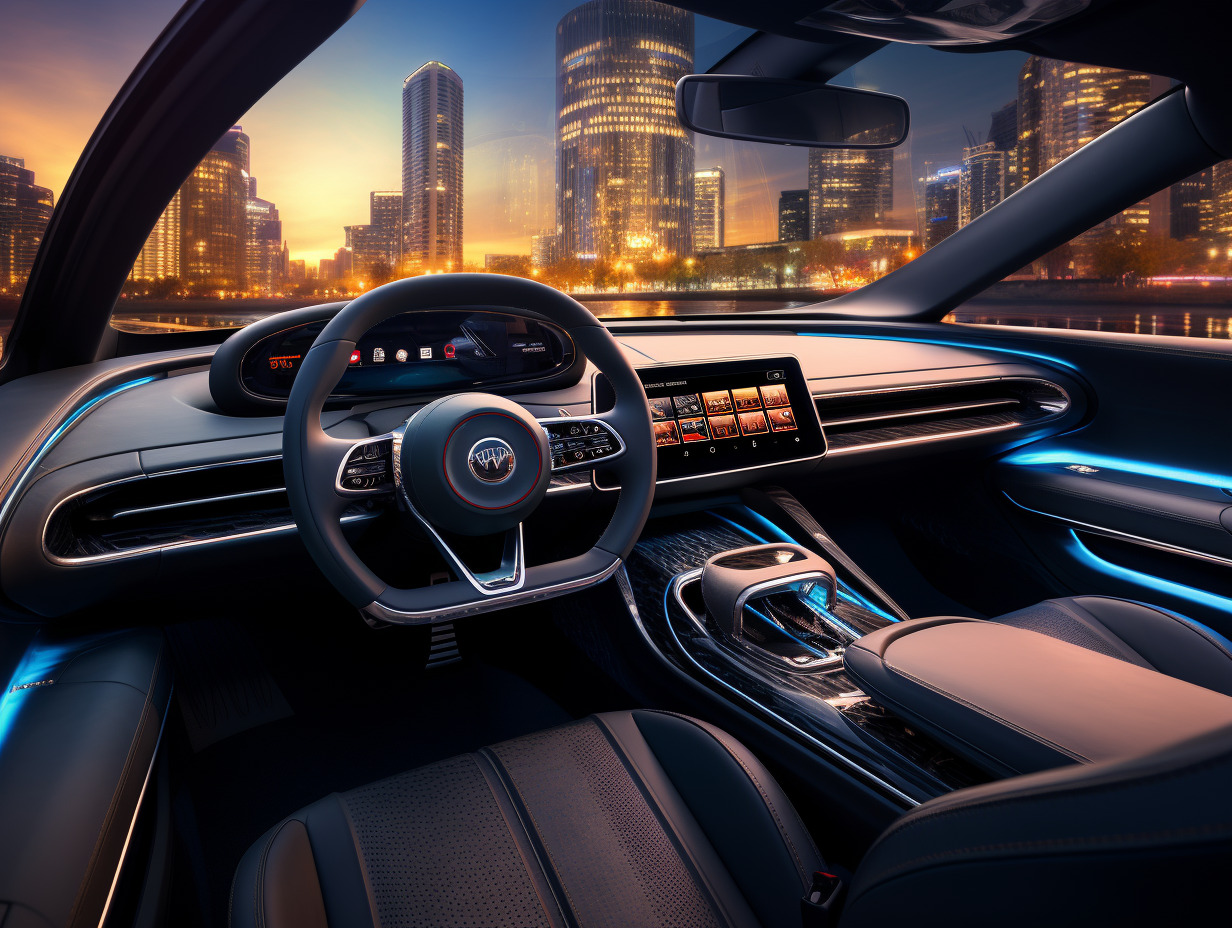
The era of traditional vehicles is gradually giving way to the revolution of connected cars, paving the way for countless technological advancements. These automobiles, equipped with sensors and smart interfaces, promise not only a significant improvement in road safety through advanced driver assistance systems but also a personalized user experience. Innovations range from semi-autonomous driving to the deep integration of the Internet of Things (IoT), allowing for seamless interaction with the urban environment and other vehicles. The potential to transform urban mobility and reduce the ecological footprint is immense, marking the beginning of an era where the car is much more than just a means of transportation.
The latest technological advancements in the world of connected cars
The past year has marked a turning point for the automotive industry, with a plethora of innovations showcased at renowned events such as the Consumer Electronic Show (CES) held in Los Angeles. Automakers unveiled a range of connected services that redefine the driving experience. The cloud and mobile data rates, particularly with the imminent arrival of 5G, are now central pivots in this revolution, offering seamless communication between vehicles and the internet of things.
Prestigious brands such as Audi, Mercedes, Ford, and Chevrolet presented their models of autonomous cars, illustrating the various levels of autonomy, from 0 to 5, that these technologies promise. The connected car is no longer a futuristic concept; it is materializing in models such as the BMW i3, operable via a smartwatch, thus offering deep integration with the user’s personal technology ecosystem.
Valeo, for example, introduced its smart key inBlue, allowing users to manage their vehicle remotely, while SenseDriver Technologies launched the SenseHud, a heads-up display compatible with iOS and Android operating systems, using Bluetooth to project navigation information onto the windshield. These innovations are part of a trend where features are becoming increasingly intuitive and integrated into drivers’ daily lives.
This year’s Must Car is shaping up with the growing adoption of technologies such as MirrorLink and Apple CarPlay, which offer robust alternatives for connecting smartphones to the vehicle interface. The connected car stands as a platform for diverse services, providing a plethora of options for infotainment, navigation, and maintenance. Take note of these advancements: they outline the future of mobility and shape a new era where the car becomes an intelligent actor within the connected city.
The impact of connected car innovations on society and the environment
The rise of the connected car outlines a profound transformation of the urban landscape with the emergence of Smart Cities. These smart cities utilize data generated by vehicles to optimize traffic, reduce congestion, and consequently lower pollutant emissions. The traffic fluidity induced by these innovations promises not only time savings but also an improvement in air quality, thus addressing major environmental challenges.
On the insurance side, the impact is palpable: the connected data collected opens the door to personalized car insurance plans based on the actual behavior of the driver. Gamification, the concept that applies game mechanics in a non-gaming context, is also making its way into driving management, encouraging safer driving practices through rewards. This innovative approach could lead to a significant decrease in road accidents, consequently improving road safety.
These advancements raise crucial questions about cybersecurity. The protection of personal data is at the heart of concerns, with entities such as the CNIL ensuring respect for privacy. The GAFA groups and automakers like PSA are engaged in a race to secure this sensitive information while leveraging its potential to offer increasingly efficient services. The connected car, a pivot of this new landscape, thus embodies a dual challenge: to be a driver of innovation while ensuring the integrity and confidentiality of user data.