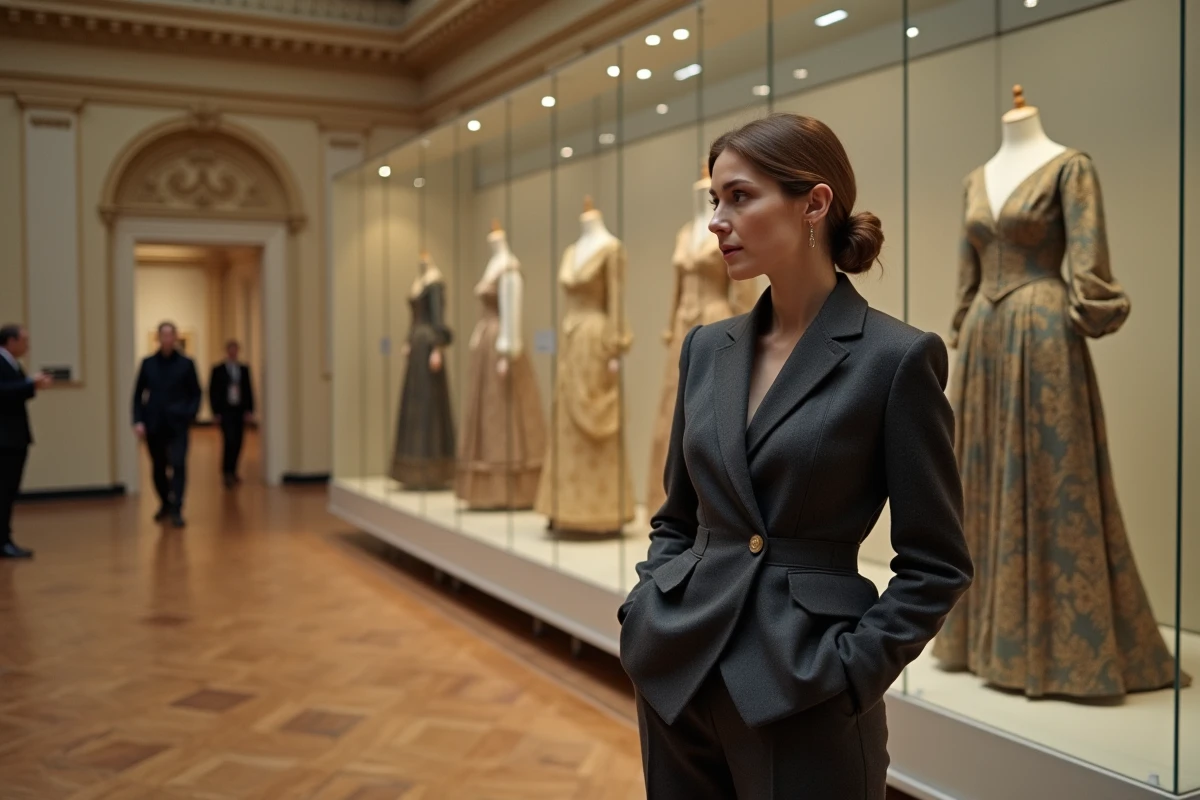
A garment always tells more than what it covers. Fashion, from antiquity to the news feeds of our social networks, operates as a visual language that translates power relations, collective aspirations, and the technical breaks of an era. Understanding the history of fashion is like reading between the seams of a society.
Fabrics and dyes: the technical engine we forget
Have you ever noticed that certain colors keep reappearing in paintings from the Middle Ages, while others remain absent? The reason is technical before it is aesthetic. The available dyes dictated trends long before designers existed as such.
Purple, extracted from Mediterranean shellfish, cost a fortune and was reserved for the Roman and then Byzantine elites. Pastel blue, cultivated in the south of France, enriched entire regions before being dethroned by indigo imported from Asia. Each chemical advancement reshuffled the style cards.
In the 19th century, mauveine (the first synthetic dye) opened the palette to shades that were previously impossible to produce in mass. Cotton changed the game from the industrial revolution onward: lighter and easier to dye, it allowed for the democratization of printed patterned clothing. Behind every fashion trend lies a textile or chemical innovation that made it possible.
Resources like petit-echo-de-la-mode.fr document this close relationship between textile know-how and the evolution of silhouettes over the centuries.

Silhouette and power: what the cut says about an era
The shape of a garment is never neutral. It expresses a relationship to the body, hierarchy, and freedom of movement in a given society.
From corsets to suits: three centuries in a nutshell
In the 17th century, the court of Louis XIV imposed rigid silhouettes, sculpted by internal structures. The garment constrains the body to signal rank. The more constraining the cut, the higher the displayed status, because only a person exempt from manual labor can afford to wear such a non-functional costume.
The French Revolution broke this code. Lines lightened, and fabrics simplified. Cuts inspired by ancient Greece, fluid and draped, were adopted in direct opposition to monarchical splendor.
In the 20th century, Coco Chanel pushed the logic further by borrowing materials from the male wardrobe (jersey, tweed) to liberate female movement. Yves Saint Laurent extended this trajectory with the women’s tuxedo. Each silhouette break corresponds to a social claim, not just an aesthetic whim.
Sportswear, the last revolution in cut
From the 1980s to the 1990s, sportswear invaded daily life. Comfort became as legitimate a criterion as elegance. This shift reflects a society that values individual performance and constant movement. Sneakers replaced heels on the street, and eventually made their way into haute couture shows.
Speed of fashion trends in the age of social media
Before social media, a fashion trend took several seasons to diffuse. A style would emerge on a runway, pass through magazines, and then reach store windows. This cycle easily took one to two years.
With TikTok and Instagram, the mechanics have radically transformed. A study published in the journal Fashion and Textiles in 2023 (Chae and Park) analyzed spikes in fashion hashtags between 2018 and 2022. The finding: micro-trends peak within weeks, compared to several seasons before. Aesthetics like “Barbiecore” or “Old Money” emerge, saturate news feeds, and then fade away at an unprecedented speed.
This acceleration has direct consequences on textile production. Fast fashion brands are shortening their manufacturing cycles even further to capture these ephemeral waves, which increases environmental pressure on the entire industry.
- A style can go from niche status to global phenomenon in less than a month thanks to a single viral piece of content.
- Independent creators gain visibility without going through the traditional circuit of magazines and department store buyers.
- The consumer becomes a prescriber: street looks filmed daily now influence the collections of fashion houses, not the other way around.
Archive fashion and second-hand: the influence of the past on current style
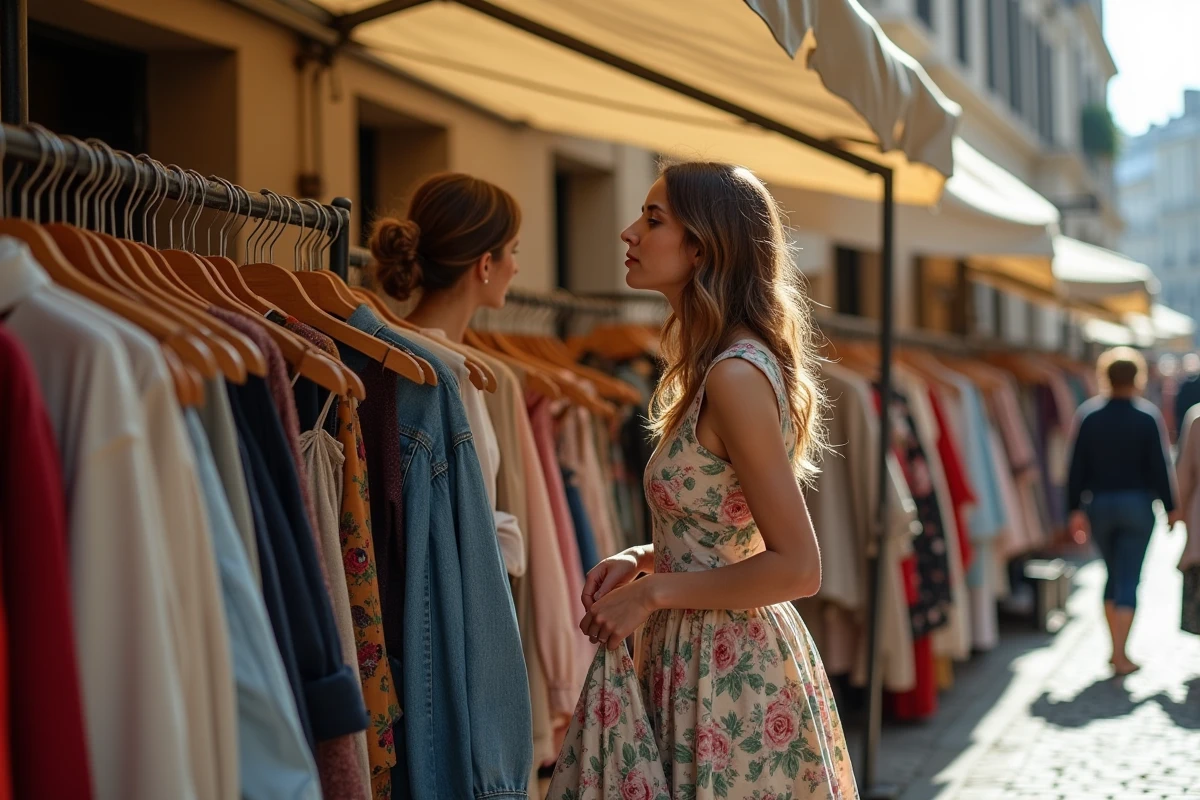
Clothing nostalgia is not new, but it is now taking on a structured commercial dimension. Platforms specializing in the resale of designer pieces have seen marked growth since 2021, particularly driven by Generation Z.
Vestiaire Collective created an “Archives” category in 2022 and reports a continuous increase in demand for iconic pieces, such as those by John Galliano at Dior or Tom Ford at Gucci (Vestiaire Collective and Boston Consulting Group report, May 2023). Wearing an archive piece has become a marker of fashion culture, not just an economic or ecological gesture.
This phenomenon brings the history of fashion full circle: the cuts, patterns, and materials of yesterday directly feed today’s trends. A coat from the 1990s worn on the street in 2025 is not a second-hand garment; it is a conscious stylistic citation.
European regulation accompanies this transformation. New traceability and environmental display obligations push brands to rethink their models, which enhances the appeal of already produced garments, whose ecological footprint is amortized.
The history of fashion is not read as a straight line from simple to sophisticated. It operates in cycles, through borrowings and tensions between technical innovation and cultural heritage. The accessories we choose tomorrow will carry, whether we like it or not, the trace of decisions made centuries ago, reinterpreted at the speed of an algorithm.