
Kinetic heating refers to a method of heat production that relies on the movement of air molecules within a heating body. Unlike a traditional convector, a device utilizing the kinetic principle accelerates the molecules of a heat transfer fluid or the air itself. This process generates a thermal transfer through molecular agitation.
The heat produced then diffuses more evenly throughout the room, with less stratification between the floor and ceiling.
Thermal transfer through molecular agitation: what the term encompasses
Kinetic energy, in physics, corresponds to the energy that a body possesses due to its motion. Applied to heating, this principle means that an internal device (turbine, low-speed fan, forced fluid circulation) sets particles in motion that transfer their energy to the walls of the radiator, and then to the surrounding air.
This mechanism differs from pure infrared radiation and natural convection. In a traditional inertia radiator, heat is stored in a dense material (ceramic, stone, cast iron) and then released slowly. With a kinetic system, heat is produced and distributed continuously, which reduces the time taken to reach the desired temperature.
Several manufacturers today offer Aireo Heating solutions that exploit this principle to maintain a stable temperature without fluctuations in every room of the home.
Room-by-room regulation and regulatory framework in France
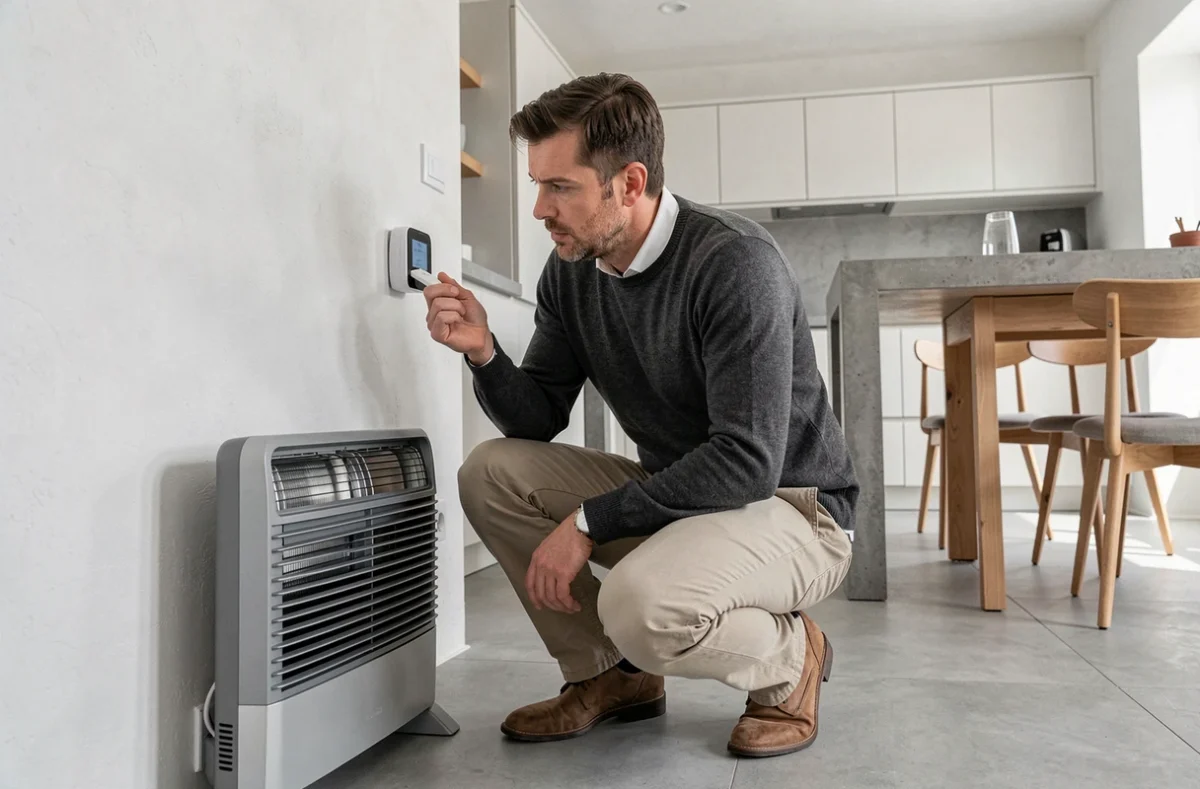
A kinetic radiator, no matter how efficient, only produces real savings if it is correctly controlled. French regulations now require automatic temperature regulation by room, or by zone when the configuration justifies it. This requirement does not make Wi-Fi mandatory: a wired thermostat or a programmer integrated into the radiator is sufficient, provided it adjusts the setpoint of each room independently.
This point deserves attention, as many kinetic systems are sold with a remote control application. Connectivity adds user comfort (programming from a phone, open window detection), but it does not guarantee a reduction in consumption by itself.
Standby consumption of connected radiators
The European regulation (EU) 2024/1103, applicable from July 1, 2025, regulates the standby consumption of decentralized heating devices. Distinct limits exist depending on whether the network connection is maintained continuously or whether communication occurs via radio or power line.
Before purchasing a connected kinetic radiator, checking its product sheet against this new text helps avoid disappointments. Compliance with the old Ecodesign 2018 reference is no longer sufficient to ensure that the device meets current eco-design requirements.
Kinetic heating and energy savings: what really makes the difference
The promise of savings associated with kinetic heating relies on three complementary mechanisms, which must be evaluated separately to avoid confusing commercial arguments with actual gains.
- The rapid temperature rise limits the time spent operating at full power. A radiator that reaches the setpoint in a few minutes consumes less than a device that takes half an hour to heat the room, at the same comfort level.
- The even diffusion reduces thermal stratification. When warm air no longer stagnates at the ceiling, the temperature felt at body level corresponds better to the measured temperature, allowing the setpoint to be lowered by one or two degrees without loss of comfort.
- The coupling with room regulation prevents heating unoccupied spaces. It is the combination of the radiator and the thermostat that produces the savings, not the radiator alone.
None of these three levers are exclusive to kinetic heating. A well-regulated inertia radiator or a next-generation radiant panel can achieve comparable performance. The gain comes from the combination of diffusion technology and precise control, not from a marketing label.
Kinetic skirting boards and wall-mounted radiators: which format for which home
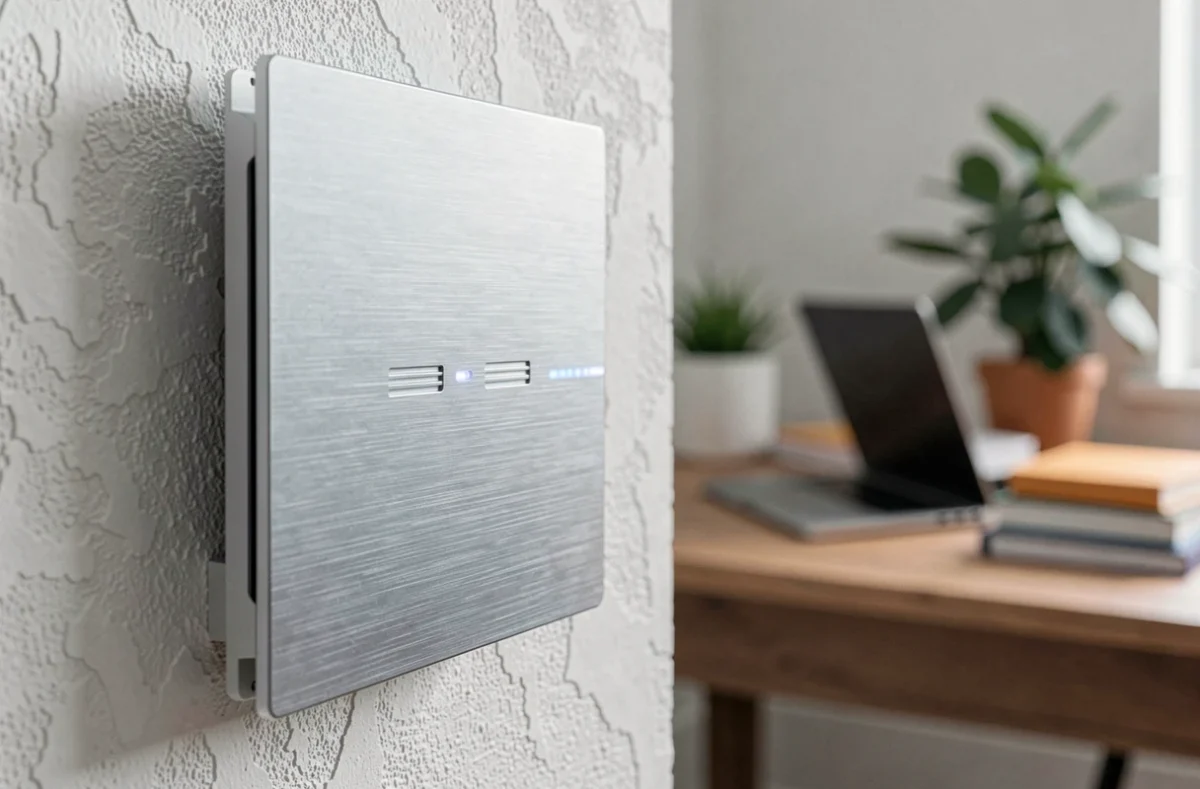
Kinetic principle devices come in two main formats. Wall-mounted radiators, the most common, are installed like any electric radiator and are suitable for medium-sized rooms (bedroom, office, living room). Kinetic skirting boards, more discreet, are fixed at the bottom of the wall along the entire length of the room.
When to prefer skirting boards
Kinetic skirting boards are beneficial in homes where the available wall surface is limited (large bay windows, stone walls to keep visible). Their positioning close to the floor promotes a natural upward diffusion that complements the molecular agitation of the system.
However, their unit power per linear meter remains lower than that of a wall-mounted radiator. For a large room, several meters of skirting boards are often needed, which increases installation costs and complicates cable routing.
Concrete selection criteria
- Room size and ceiling height: beyond a certain height, stratification becomes a problem again even with a kinetic system, and a radiant supplement may be necessary.
- Insulation of the home: in a poorly insulated building, the rapid temperature rise of a kinetic radiator does not compensate for heat losses. Insulation remains the primary lever for savings.
- Overall budget: compare the price of the device, standby consumption (verifiable on the product sheet compliant with regulation 2024/1103), and the cost of associated regulation.
Kinetic heating provides tangible thermal comfort through rapid and even heat diffusion. Its ability to generate energy savings depends less on the technology itself than on the quality of room-by-room regulation and the level of insulation of the home. Checking the regulatory compliance of the device with the current European regulation remains the most reliable action before any purchase.